Sumi – material, making and use of Japanese ink
6 min read · Published
In short
Sumi (墨) is East Asian ink made from soot and animal glue. Traditionally it is produced as a solid stick and ground with water on an inkstone. Nara has been Japan's main production centre for centuries.
What does sumi mean?
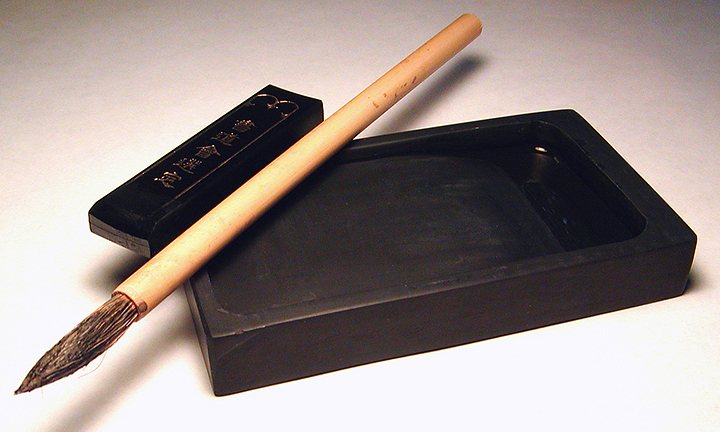
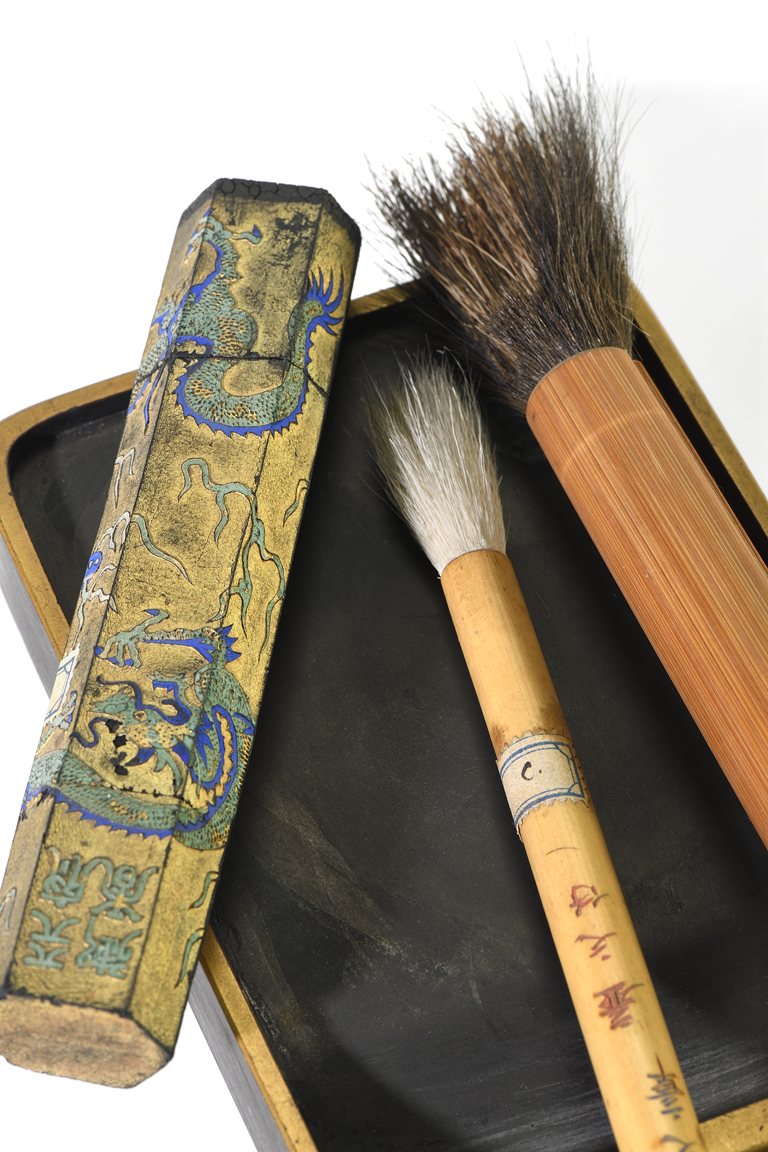
Sumi (墨) is the Japanese word for ink — more precisely the black ink made of soot and a binder that is used for writing and painting in East Asia. The word refers both to the solid ink stick and to the ground liquid. Without sumi there is neither Shodō nor ink painting: according to the account of Nara ink, ink is perhaps the most fundamental medium of East Asian calligraphy and painting.[1]
In Japan ink was one of the “Four Treasures of the Writing Table” — brush, ink, inkstone and paper — which remained a recurring theme even in Edo-period prints and paintings.[3]
What is sumi made of? Soot and glue
Traditional Japanese ink has two main ingredients: carbon soot and animal glue (nikawa). The glue is obtained by boiling the dermis of animals such as cattle or deer, and binds the soot. To soften the smell of the glue, fragrances such as musk, borneol or Japanese apricot blossom essence are added — hence the clean scent when the stick is ground.[1]
Pine soot and lamp soot
In the Nara, Heian and Kamakura periods, shōen was preferred for Nara ink: soot from resin-rich pine wood, chopped and burned in a stove. At the beginning of the Muromachi period a monk at Kōfuku-ji temple is said to have made ink from the soot of votive oil lamps before Buddha statues. This lamp-soot ink (yūen-zumi) gave a deep black and became the most commonly used ink.[1]
How is sumi made?
Few steps can be mechanised; ink is still made today by experienced artisans using old methods. The account of Nara ink describes the following steps:[1]
- 1 · Collecting sootSoot comes from burning pine wood or from oil-lamp flames. Kobaien in Nara describes making soot by gently heating oils and resins over candle flames.
- 2 · Mixing and kneadingThe soot is mixed with heated glue and kneaded into a ball — first with full body weight (ashineri, foot kneading), then finely by hand (teneri).
- 3 · MouldingThe mass is pressed into wooden moulds and clamped. Carved patterns and lettering are impressed into the ink.
- 4 · Slow dryingBecause drying too fast causes cracks, the sticks rest in wood ash for about 10 to 30 days, then hang tied together to dry completely.
- 5 · FinishingThe surface is polished with a clam shell; some sticks are decorated with gold dust or coloured pigments.
Because animal glue spoils easily in warm temperatures, ink is made only in the colder months, from autumn to winter.[1]
Why is Nara so important for Japanese ink?
According to tradition, the history of Japanese ink began in 610, when a Korean monk named Damjing (Donchō in Japanese) brought the production method to Japan — the source explicitly phrases this as “it is said”. With the relocation of the capital to Nara at the start of the eighth century, ink making moved there too. Even after the court moved in 794, Nara with its many temples remained religiously significant: sutra copying required much ink, and nearby forests provided raw material.[1]
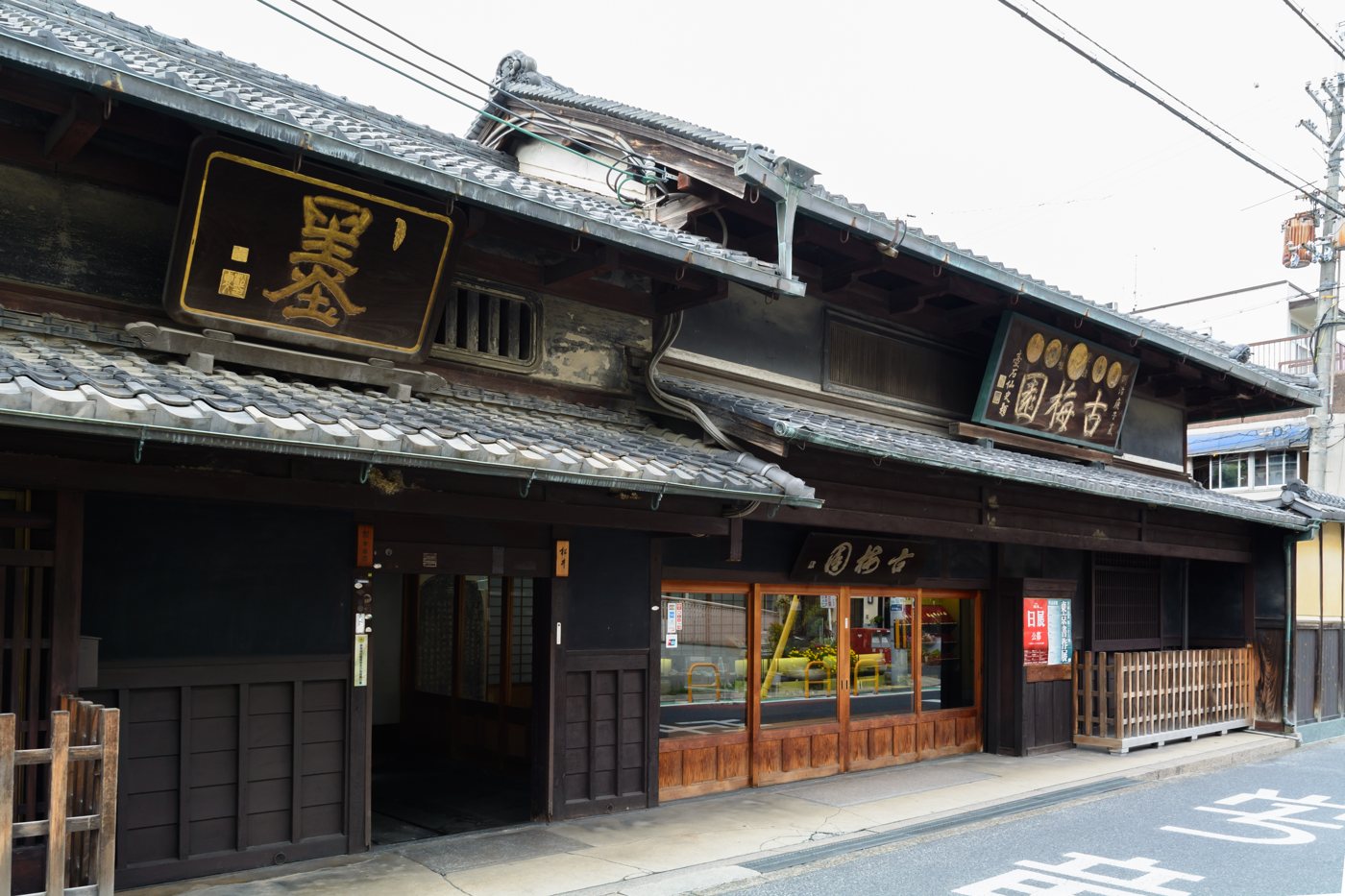
Today, according to the same account, around 95 percent of the sumi ink made in Japan comes from Nara; few places have the necessary processes and materials. Among the oldest makers is Kobaien, which according to the official Nara travel guide has made ink in the traditional way since 1577.[1][2]
Timeline
- 610 (tradition)Production method said to be brought to Japan by the monk Damjing/Donchō.[1]
- early 8th c.Ink making moves to Nara with the capital.[1]
- Nara to Kamakura periodsPine soot (shōen) preferred.[1]
- early Muromachi periodLamp-soot ink (yūen-zumi) at Kōfuku-ji.[1]
- 1577Kobaien begins making ink, per the travel guide.[2]
- todayAbout 95% of Japanese sumi ink from Nara.[1]
Ink stick or liquid ink?
The classical way is the solid ink stick. There is also ready-to-use liquid ink, common today in teaching and practice because it saves time and is consistent. The composition of liquid inks varies by maker; information on this comes mainly from manufacturers. Which an artist uses is a personal working decision.
How is ink ground on the suzuri?
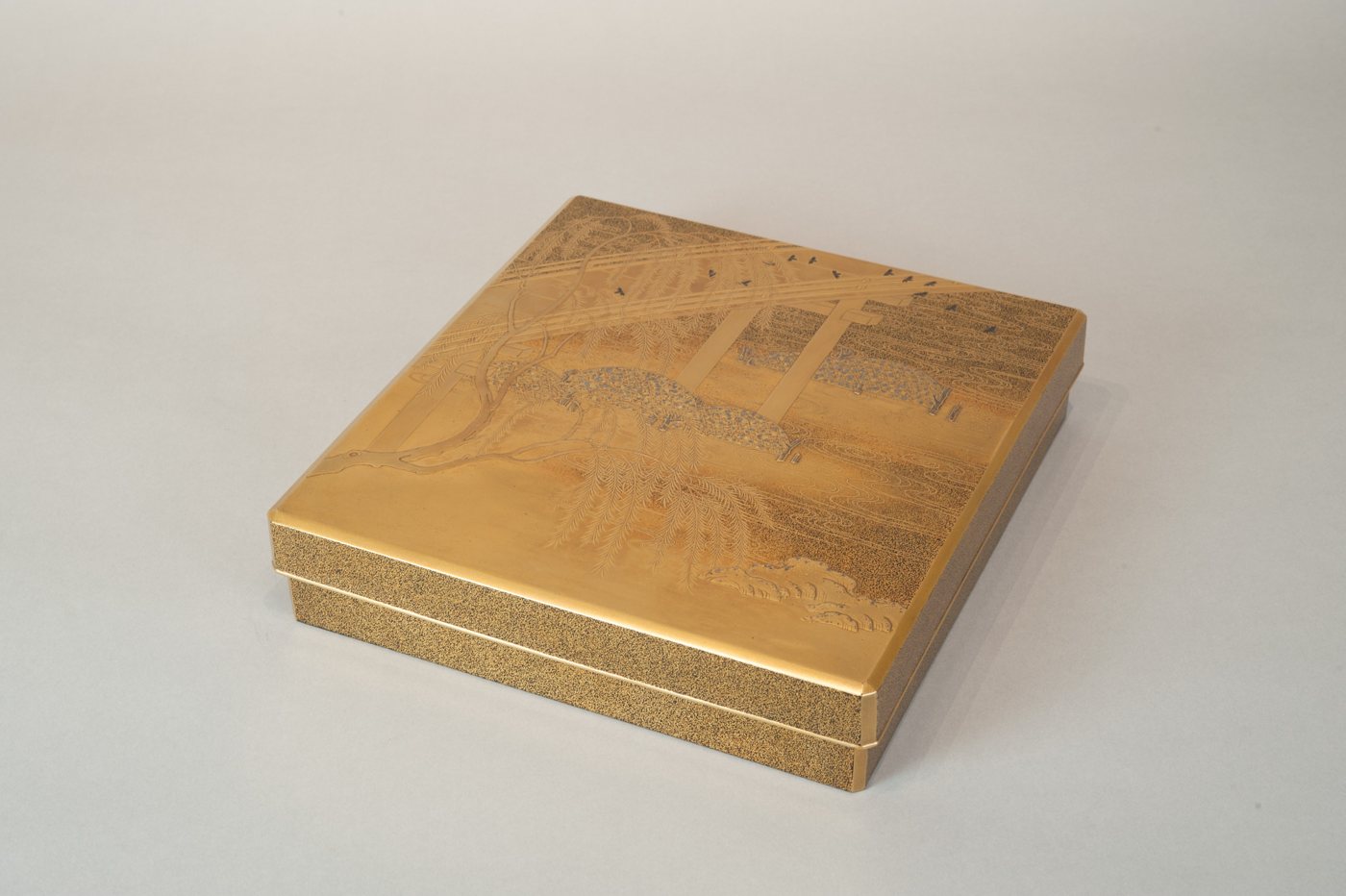
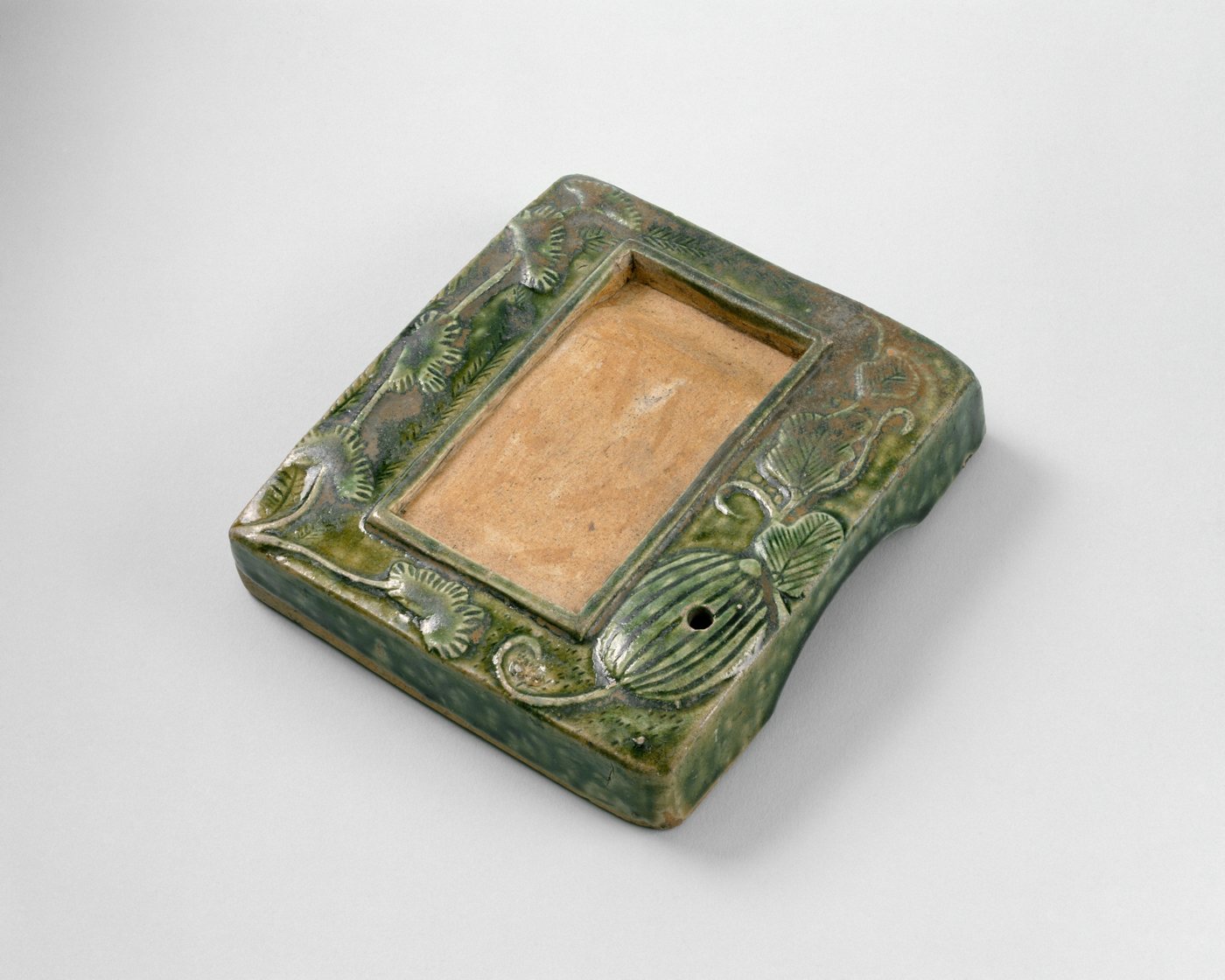
Before starting, the calligrapher or painter grinds the ink stick back and forth with water on the inkstone until the ink is ready. The account of Nara ink also describes this as a moment to clear the mind; only then does writing or painting begin. That is why ink sticks were often finely decorated.[1]
How do dilution, brush and paper shape the trace?
The visible trace results from several factors working together: How dense or diluted is the ink? How much does the brush hold, how springy is it? How absorbent is the paper? And how fast, with how much pressure, is the writing done? Rich ink gives deep black; an almost dry brush breaks up and lets the paper show through. On absorbent paper ink spreads and forms soft edges.
Sumi in calligraphy and ink painting
The same ink serves writing and painting. In calligraphy it carries characters and movement; in ink painting (sumi-e) it creates landscapes, plants and figures through gradations of black. Historically the two often meet on one hanging scroll.[3]
Ink craft today
Ink making is a specialised craft with seasonal production, long drying times and few locations. According to the official travel guide, Kobaien's shop is a destination for calligraphers and artists, and on request visitors can see the workshop where soot is made. This economic concentration explains why much of the ink made in Japan comes from one region.[1][2]
Sumi in the originals at SumiFox
According to the product information, the works currently offered are executed in sumi ink on paper. Which ink sticks, makers or soot types the artists use is not documented — so we make no claims about it.
Questions and answers
- Is sumi the same as ink?
- Sumi is an ink made of soot and animal glue. Many modern inks are based on other colourants and binders.
- Why is ink made only in winter?
- The animal glue spoils easily in warmth, so production runs from autumn to winter.
- Which ink do the artists at SumiFox use?
- The product information states sumi ink on paper. Further details about makers are not documented.
Read on
Sources
- Art Research Center, Ritsumeikan University, mit Kyoto Women's University (Google Arts & Culture) (Murata Takashi (Text); Informationen: Nara Ink Organization): Nara Ink – Japan's oldest and largest sumi ink production area. https://artsandculture.google.com/story/nara-ink-art-research-center-ritsumeikan-university/0wVxpN9NWAVvIw?hl=en (accessed 11 October 2026)
- Nara Prefecture – Official Nara Travel Guide: Kobaien 古梅園. https://www.visitnara.jp/venues/S01072/ (accessed 11 October 2026)Official tourism information; workshop details reflect the business's own account
- The Metropolitan Museum of Art, New York: Brush Writing in the Arts of Japan (Ausstellung / exhibition, 17.08.2013–12.01.2014). https://www.metmuseum.org/exhibitions/listings/2013/brush-writing (accessed 11 October 2026)
- The Metropolitan Museum of Art, New York: Open Access at The Met. https://www.metmuseum.org/hubs/open-access (accessed 11 October 2026)
Image credits
- Ink stick, brush and inkstone, before 2006 — Sparkit (Wikimedia Commons).
Source: https://commons.wikimedia.org/wiki/File:Sumie.jpg
Licence: Public Domain (laut Dateiseite / per file page) · Foto: Sparkit, Wikimedia Commons, Public Domain
Edits: Resized and re-compressed as JPEG; not cropped, colours unchanged. · checked 11 October 2026 - Kobaien shop building, Nara, October 2014 — Degueulasse (Wikimedia Commons).
Source: https://commons.wikimedia.org/wiki/File:Kobaien_20141001.jpg
Licence: CC BY 3.0 · Foto: Degueulasse, Wikimedia Commons, CC BY 3.0
Edits: Resized and re-compressed as JPEG; not cropped, colours unchanged. · checked 11 October 2026 - Box for Inkstone and Writing Implements (Suzuribako), 19th century — Japan, Edo-Zeit / Edo period; The Metropolitan Museum of Art, H. O. Havemeyer Collection, 1929, 29.100.682.
Source: https://www.metmuseum.org/art/collection/search/58120
Licence: CC0 1.0 (Met Open Access) · The Metropolitan Museum of Art, New York (Public Domain)
Edits: Resized and re-compressed as JPEG; not cropped, colours unchanged. · checked 11 October 2026 - Inkstone, ink stick and brushes, Japan, 19th century, photo 2020; objects 19th century — Paolo Terzi; Collezione Govi, Museo Civico di Modena.
Source: https://commons.wikimedia.org/wiki/File:Tavoletta_in_lavagno,_bastoncino_di_inchiostro_e_pennelli._Giappone,_XIX_secolo._Museo_Civico_di_Modena.jpg
Licence: CC BY-SA 3.0 · Foto: Paolo Terzi, Museo Civico di Modena, CC BY-SA 3.0
Edits: Resized and re-compressed as JPEG; not cropped, colours unchanged. · checked 11 October 2026 - Inkstone (Suzuri) with Gourd Vine, Mino ware, late 16th–early 17th century — Japan, Momoyama-Zeit / Momoyama period; The Metropolitan Museum of Art, Bequest of Dr. and Mrs. Roger G. Gerry, 2000, 2002.447.29.
Source: https://www.metmuseum.org/art/collection/search/49283
Licence: CC0 1.0 (Met Open Access) · The Metropolitan Museum of Art, New York (Public Domain)
Edits: Resized and re-compressed as JPEG; not cropped, colours unchanged. · checked 11 October 2026